“Hatred is not a creative force. Only love is the creative force.” – St. Maximilian Kolbe
On 14 August, the Church celebrates the Feast of St. Maximilian Kolbe, a modern martyr whose breathtaking sacrifice continues to challenge and inspire the world more than eight decades after his death in 1941.
For Secular Franciscans, this is a deeply significant feast. We often think of our Franciscan saints as figures from medieval history. But in St. Maximilian, we encounter a brother who witnessed to the Gospel in the face of modern technology and modern darkness.
Within our large Franciscan family, Maximilian stands alongside Francis and Clare as a great witness to what can happen when a person takes the Gospel seriously enough to allow it to transform everything.
Here in Singapore, as we navigate a fast-paced, highly connected, and competitive society in 2026, his life offers a powerful blueprint for what it means to live the Franciscan charism right now.
But who was St. Maximilian, and why should his life matter to Secular Franciscans, or indeed to Christians trying to follow Christ amid the pressures of ordinary life today?
A Young Man Who Embraced the Future
Maximilian was born Raymond Kolbe in Poland in 1894. From his youth, he was fIlled with an intense passion for God and the Blessed Mother.
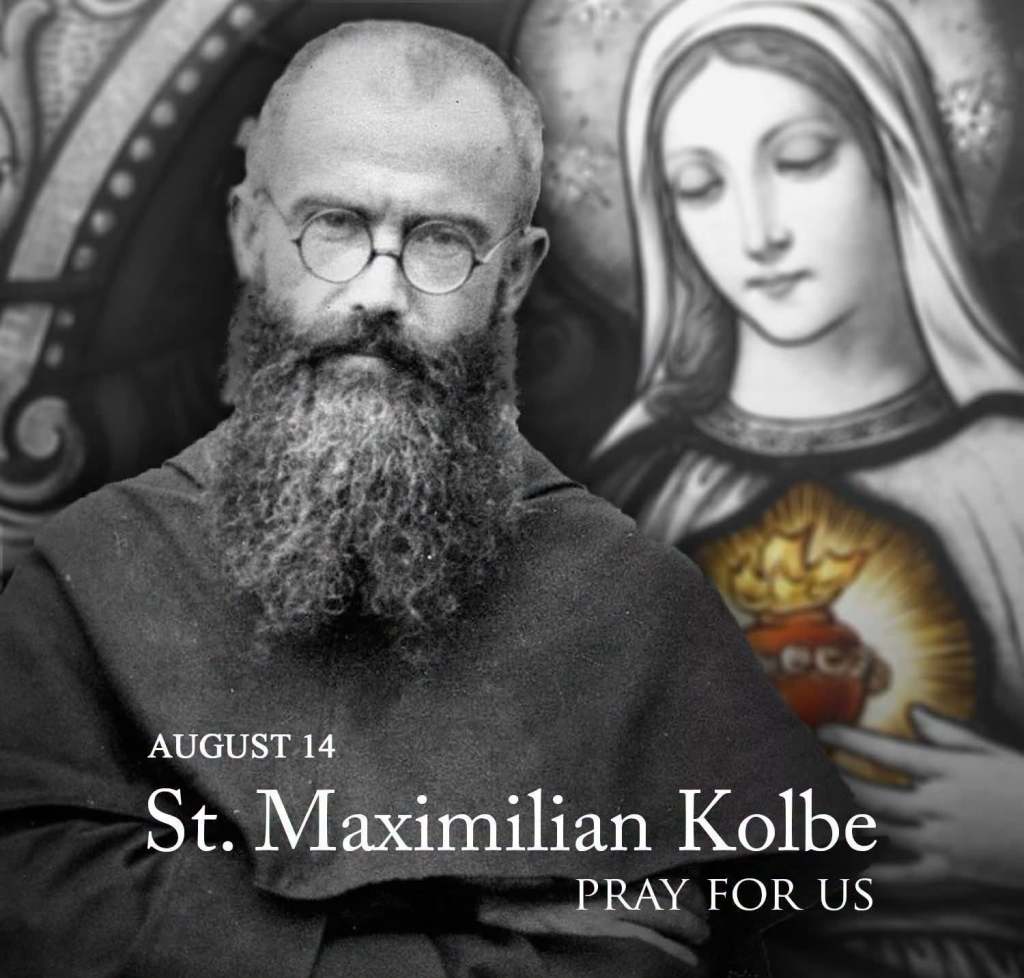
He joined the Conventual Franciscan Friars and was ordained a priest. But Father Kolbe was not a friar who wanted to stay hidden inside monastery walls. He looked at the world around him, a world rapidly changing with new inventions, and saw tools to spread God’s love.
St. Francis travelled on foot to preach the Gospel. St. Maximilian used the printing press and amateur radio.
He founded a massive printing apostolate and a Franciscan friary near Warsaw called Niepokalanów (the “City of the Immaculata”). Hundreds of friars lived there, using modern media to share messages of faith and peace.
He even went as a missionary to Japan, establishing a monastery in Nagasaki that famously survived the atomic bomb because it was built behind a mountain.
Like St. Francis, who always looked for new ways to share Christ, Maximilian showed that a Franciscan vocation is never stuck in the past. It always looks forward.
The Ultimate Expression of Franciscan Charity
The ultimate test of his Franciscan life came during World War II. Because of his influential publications, Nazi soldiers arrested him. In May 1941, he was sent to the Auschwitz concentration camp.
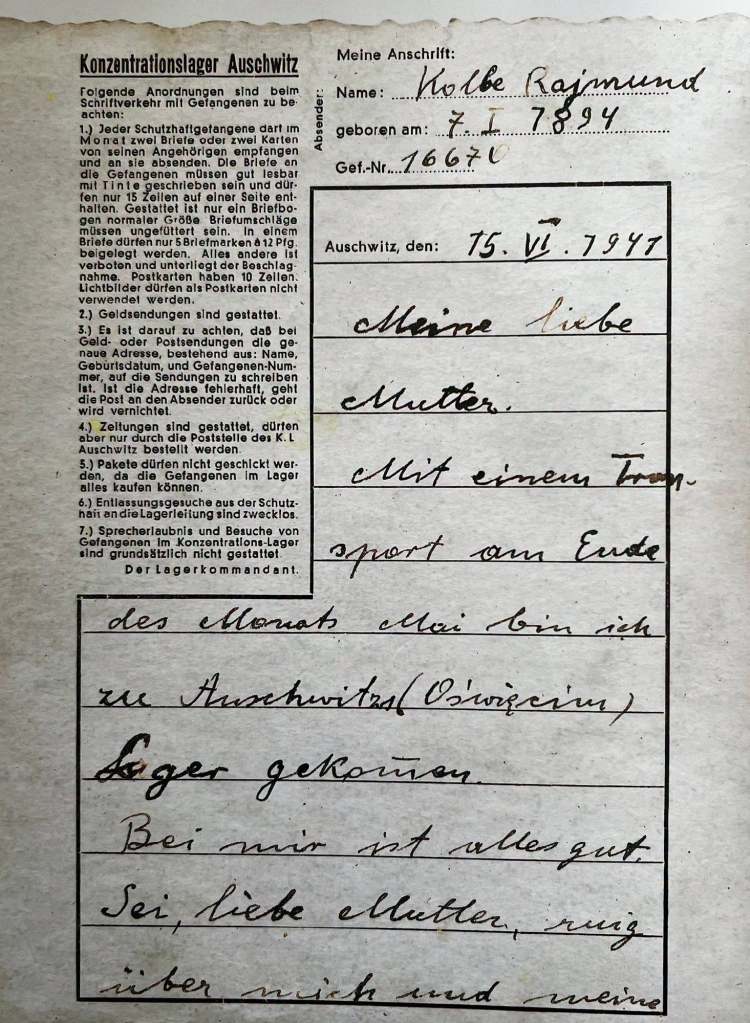
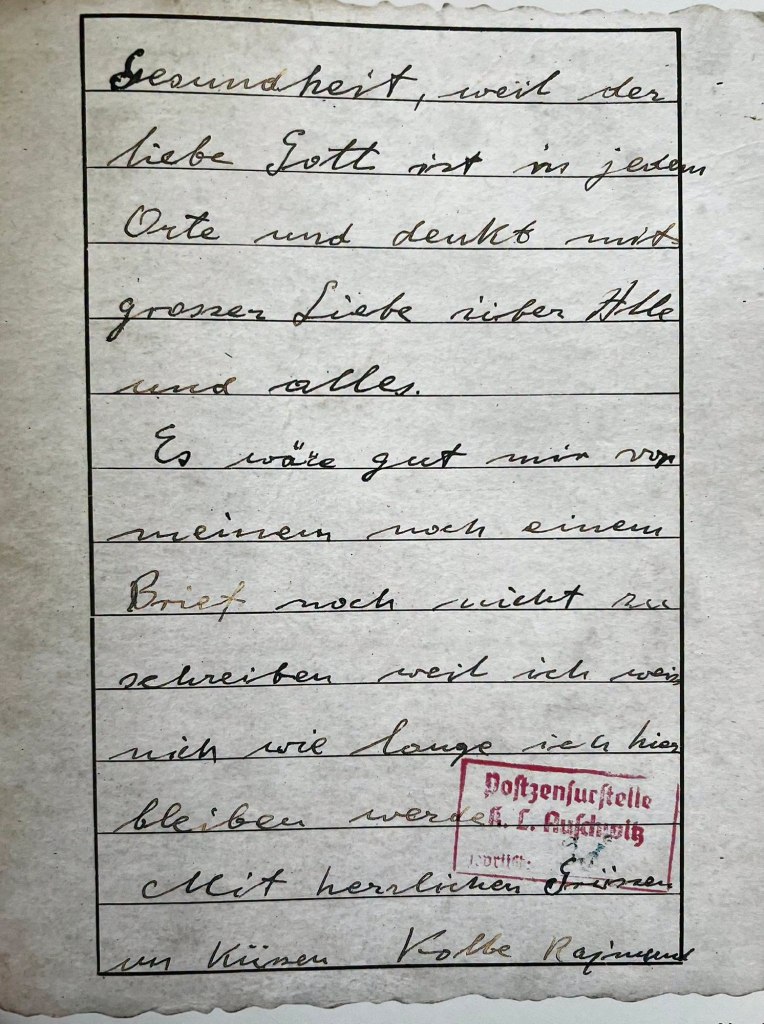
Photo credit: Auschwitz Memorial | Polish Franciscan Father Maksymilian Maria Kolbe, imprisoned in Auschwitz (no. 16670), wrote this letter in the camp to his mother: “My dear Mother, I arrived at the camp in Auschwitz (Oświęcim) with a transport at the end of May. Everything is fine with me. Be at peace about me, dear Mother. My health is good. The dear God is everywhere and thinks with great love about everyone and everything.” Listen to the podcast about the fate and sacrifice of Father Maksymilian Kolbe
Even in that living hell, where prisoners were stripped of their names and treated like numbers, Father Kolbe remained a true Franciscan minor (lesser brother). He smuggled the sacraments to dying men, shared his tiny portions of bread, and filled the dark barracks with words of hope.
In July 1941, a prisoner escaped from his block. As a terrifying punishment, the camp commander selected ten men at random to be locked in a dark underground bunker to starve to death.
One of the chosen men, a husband and father named Franciszek Gajowniczek, wept aloud, crying out for his wife and children.
Moved by deep Franciscan love, Father Kolbe did the unthinkable. He stepped out of line. He walked straight to the Nazi commander and made a calm, simple request: “I am a Catholic priest. I wish to die in his place. He has a wife and children.”
In a place built on hatred, an act of pure love took place. The commander accepted the switch. For two weeks, the starvation bunker, usually a place of horrific screams and despair, resounded with prayers, psalms, and hymns led by Father Kolbe. One by one, the men died in peace. On 14 August 1941, as the final four remained alive, guards ended Father Kolbe’s life with a lethal injection. He died with a smile on his face.
What Does St. Maximilian Have to Do with Secular Franciscans?
This is an important question because Secular Franciscans are not friars or cloistered nuns. Our Franciscan vocation is lived within the world.
It is lived around the family dining table, in Singaporean offices, on the MRT, in schools, and across our neighbourhoods. We face the distinct pressures of our own 21st century: an anxious, hyper-connected culture, economic pressures, and the constant digital noise of social media.
And this is precisely where our brother Maximilian has something important to teach us.
[1] Digital Stewardship: Transforming Media for Good
Maximilian did not fear technology; he evangelised it. In a smart city like Singapore, we spend hours online.
- Before posting, do our words on Facebook, Instagram, and WhatsApp bring peace?
- Do we use our digital presence to lift up human dignity, or do we join in the noise of gossip, comparison, and division? Maximilian challenges us to use every modern tool at our disposal to be instruments of God’s peace.
[2] Creative Charity: Loving When It Hurts
Franciscan charity is not just about being polite. It is a radical, active love. Maximilian did not wait for the concentration camp to end before he started being kind. He chose to love in the exact place he was planted, under the most difficult conditions.
- Can we choose love when our workplace is stressful?
- Can we extend charity to a difficult family member, a demanding colleague, or an unkind neighbour
[3] Total Availability to Our Brothers and Sisters
Maximilian looked at a complete stranger and saw a brother. He valued that father’s life above his own. As Secular Franciscans, we are called to look past labels of status, race, or success.
We are called to see every person in Singapore as our sister and our brother.
A Guide for Our Own Century
When Pope John Paul II canonised him in 1982, he famously called him the “Patron Saint of Our Difficult Century.” While the Pope was speaking of the turbulent 20th century, the era when Kolbe lived and died, this prophetic witness speaks perhaps even more loudly to us today in the 21st century.
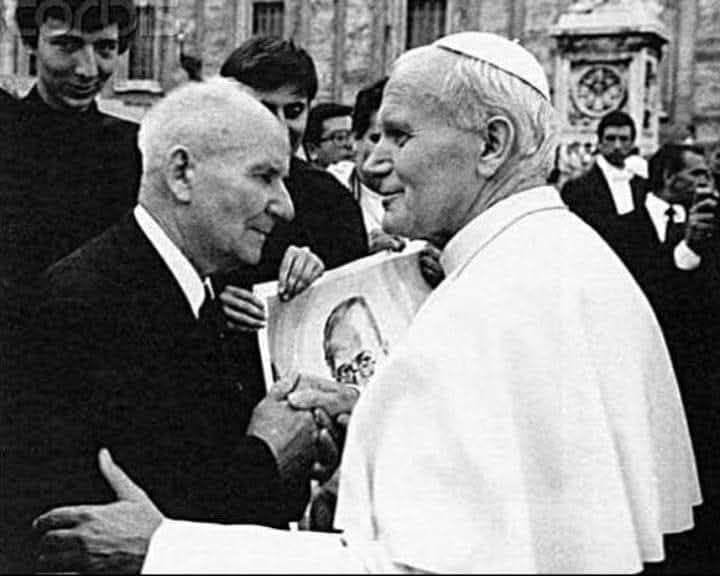
Our modern world remains deeply difficult. We face new forms of isolation, mental exhaustion, anxiety, and extreme consumerism. But St. Maximilian Kolbe reminds us that no darkness is too thick for the light of Christ to pierce.
We do not have to die a martyr’s death to follow him. We simply need the courage to die to our own selfishness every single day.
On this Feast of St. Maximilian Kolbe, we give thanks for our brother Maximilian and for the active, creative dimension of charity he brings to the Franciscan family.
May we follow his example, going from Gospel to life and life to the Gospel, until our lives, too, quietly but unmistakably direct others towards Christ.
St. Maximilian Kolbe, pray for us!


Leave a Reply